
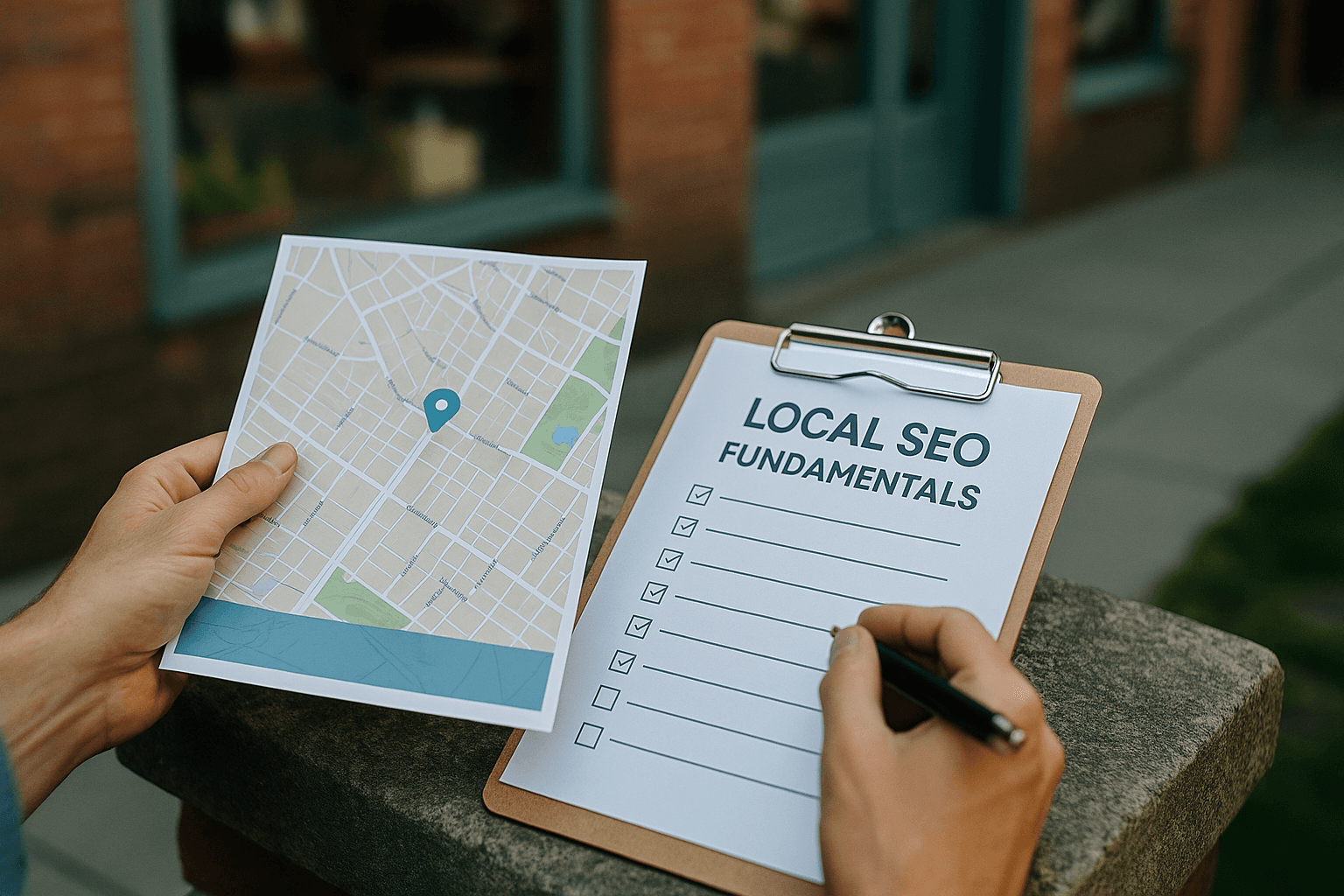
Local SEO Fundamentals Checklist: 12 Things Every New Business Must Fix Before Running Ads
Before you spend a single euro on paid ads, your local SEO foundations need to be solid. This 12-point checklist covers everything a new business must fix to rank locally and convert real customers.
If you are a new business preparing to launch paid advertising, stop. Before you set a daily budget or write your first ad, your local SEO checklist for new businesses needs to be completed. Running ads to an unoptimized local presence is like pouring water into a leaking bucket: you spend more, convert less, and hand your competitors a permanent advantage.
Local SEO builds the foundation that every other marketing channel relies on. A complete Google Business Profile, consistent business data, a fast mobile website, and genuine customer reviews all feed into whether Google trusts you enough to show your business to nearby searchers. In 2026, with AI-generated answers and local packs dominating the first page, that trust signal is more important than ever.
- Fix your Google Business Profile before anything else
- NAP consistency across all directories is non-negotiable
- Your website must be mobile-fast and locally relevant
- Reviews are a ranking signal, not just social proof
- Schema markup helps both Google and AI understand your business
- Competitor gap analysis reveals quick wins most new businesses miss
- Fixing these 12 points first makes paid ads significantly cheaper and more effective
1. Claim and Verify Your Google Business Profile
Your Google Business Profile (GBP) is the single most important local SEO asset you own. Without it, you do not appear in Google Maps or the local pack. Claim your listing at business.google.com, verify ownership by postcard, phone, or video, and confirm every detail is accurate from day one.
Choose the most specific primary category that describes what you do. A plumber should not select "Contractor" when "Plumber" is available. Secondary categories can be added to cover additional services.
For a deep dive into making every section of your profile work harder, read our guide on GBP services section mastery for local calls.
2. Ensure NAP Consistency Everywhere
NAP stands for Name, Address, and Phone number. These three pieces of data must match exactly across your website, Google Business Profile, social media pages, and every directory listing. Even small differences, like "St" versus "Street" or a missing suite number, create conflicting signals that erode trust with search engines.
Audit every place your business appears online before you launch. Use a spreadsheet to track each platform and flag inconsistencies. Fix the biggest directories first: Google, Bing Places, Apple Maps, Yelp, and any industry-specific directories relevant to your niche or region.
3. Build a Fast, Mobile-Optimized Website
Most local searches happen on smartphones. If your website loads slowly or breaks on mobile, you lose the visitor before they ever read a word. Google's Core Web Vitals are a direct ranking factor, and in 2026 they are weighted more heavily than ever for local results.
Key targets to hit:
- Largest Contentful Paint (LCP) under 2.5 seconds
- Interaction to Next Paint (INP) under 200 milliseconds
- Cumulative Layout Shift (CLS) below 0.1
- Mobile-friendly layout that passes Google's mobile usability test
For a full breakdown of which performance metrics actually move the needle for local businesses, see our article on Core Web Vitals for local business websites in 2026.
4. Add Your Business Address to the Website
Your physical address should appear on your website in crawlable HTML text, not just an embedded map image. Place it in the footer of every page, on the contact page, and inside your schema markup. This gives Google a consistent local signal that reinforces your GBP data.
5. Implement LocalBusiness Schema Markup
Schema markup is structured data you add to your website's HTML to help search engines understand exactly what your business is, where it operates, and what it offers. The LocalBusiness schema type is the baseline. Extend it with more specific types like Plumber, Restaurant, or DentalClinic when applicable.
Include these fields as a minimum:
- Business name, address, and phone number
- Opening hours
- Primary category and service area
- URL and logo
- Aggregate rating (once you have reviews)
Schema also feeds AI-powered search features. Google's AI Overviews and other AI answer engines pull structured data to generate local recommendations. A business without schema is harder for AI to cite confidently.
6. Create a Dedicated Location Page
If you serve a specific city or neighbourhood, create a page on your website specifically for that location. This is not a generic "Contact Us" page. It should include local content: the area you serve, specific services offered there, local landmarks or context, and a clear call to action.
A good URL structure looks like this: example.com/locations/[city-name]/ or example.com/[city-name]-[service]/. If you serve multiple cities, this becomes a scalable architecture that compounds your local rankings over time. Our guide on location page architecture for multi-city service businesses shows exactly how to build this framework.
7. Optimize Title Tags and Meta Descriptions for Local Intent
Every page on your website should have a unique title tag and meta description that includes your primary service and location. For example, a homepage title for a Glasgow electrician might read: "Electrician in Glasgow | 24-Hour Emergency Callouts." This signals local relevance to both search engines and searchers scanning results.
Avoid duplicate titles across pages. Each service page and each location page should target a distinct keyword combination.
8. Get Your First Reviews and Build a Review Strategy
Reviews are a confirmed local ranking signal. New businesses often deprioritize reviews because asking feels awkward. It should not. After each job or transaction, send a direct link to your Google review page and ask satisfied customers to share their experience.
A business with 15 genuine four-star reviews will consistently outrank a competitor with zero reviews, even if that competitor has a larger website and a bigger ad budget.
Set a target of reaching at least 10 reviews within your first 90 days. Respond to every review, positive or negative. Your replies are public signals that show Google and potential customers that you are active and engaged.
9. List Your Business in Relevant Local Directories
Beyond Google and Bing, local directories provide citation signals that reinforce your NAP data and boost your authority in a specific area. Prioritise directories that are relevant to your country, industry, and city.
For European businesses, this often includes:
- Apple Maps
- Yelp (active in several European markets)
- Tripadvisor (for hospitality and tourism)
- Industry-specific directories (trade bodies, chamber of commerce listings)
- Local news sites or business directories for your city or region
Quantity matters less than quality and consistency. Twenty accurate listings beat a hundred with mismatched details.
10. Publish Locally Relevant Content
A blog or resources section on your website is not just for large brands. Even two or three well-written articles targeting local search queries can dramatically improve your topical relevance. Think about the questions your customers actually ask before hiring you.
Examples of locally targeted content topics:
- "How much does [service] cost in [city] in 2026?"
- "Best time of year to [service] in [region]"
- "What to look for when hiring a [trade] in [city]"
This type of content also increases your chances of appearing in AI-generated answers. To understand how AI search features select and cite content, read our guide on AI Overview SEO: how to get featured in Google AI answers.
11. Check and Optimize Your GBP for AI Search Signals
In 2026, optimizing your Google Business Profile goes beyond filling in the basics. AI-powered local search features use your GBP data to generate recommendations, answer questions, and summarize businesses in ways that never existed two years ago. Make sure your profile includes:
- A detailed business description that uses natural language about your services and location
- All relevant service categories and individual services listed with descriptions
- Up-to-date photos posted regularly
- Answers to frequently asked questions in the Q and A section
- Google Posts published at least twice per month
For a complete playbook on this, see our article on how to optimize your Google Business Profile for AI search in 2026.
12. Run a Competitor Gap Analysis Before You Touch Your Ad Account
Before you invest in paid channels, spend time understanding why your top local competitors are ranking above you. Look at their GBP categories, the number and recency of their reviews, the pages on their website, and the directories they appear in. This analysis reveals the gaps you need to close and the opportunities they have missed.
Common gaps found in competitor analysis:
- Competitors missing specific service sub-pages that you could create
- Thin or outdated content that you can replace with something more useful
- Low review counts in a market where even 20 reviews would make you the most trusted option
- Missing schema markup that gives you a structured data advantage
Small businesses consistently win local search battles when they focus on the right gaps. Our guide on how small businesses can compete in local search against big brands covers this strategy in detail.
Conclusion: Build the Foundation, Then Scale with Ads
Paid ads are a powerful accelerator, but they amplify whatever is already there. If your local SEO foundation is weak, ads accelerate your losses. If your foundation is strong, ads multiply your returns.
Work through this local SEO checklist for new businesses systematically. Start with your Google Business Profile and NAP consistency, then move to your website's technical health and local content. By the time you launch your first campaign, you will have a local presence that converts paid traffic efficiently, earns organic rankings on its own, and builds a reputation that compounds month after month.
Local SEO is not a one-time task. It is an ongoing practice. But getting the fundamentals right before you open your ad account is the single highest-leverage move a new business can make in 2026. Explore more local SEO tools and resources at Serpixa to keep your visibility growing.
Frequently asked questions
Next step
Ready to stop guessing and start ranking? Serpixa gives local businesses and agencies a clear, audit-led view of their local SEO health, so you can fix what matters most before spending a single euro on ads. Start your local SEO audit with Serpixa at <a href="/en">serpixa.com</a> and turn your local presence into a lead generation machine.
Explore Serpixa →Continue reading
Beyond LocalBusiness: Which Schema Types Actually Boost Visibility for Service Businesses in 2026
Most service businesses stop at LocalBusiness schema and leave significant visibility on the table. Discover which advanced schema types genuinely move the needle for local search in 2026.
The SEO Audit Triage Method: How to Prioritize 50 Fixes Into a 5-Step Action Plan
Drowning in a 50-point SEO audit with no idea where to start? This triage method turns your bloated fix list into a clear, ranked action plan built for local businesses and agencies in 2026.
The Seasonal Content Refresh Calendar: When and What to Update on Your Service Pages Each Quarter
A practical quarterly content refresh calendar that shows local businesses and agencies exactly when to update service page content, what to change, and how to protect organic rankings all year.
How to Build a White-Label SEO Report Clients Actually Read in 2026
Most white-label SEO reports land in a client's inbox and never get opened. Learn how to structure, design, and deliver agency reports that drive real conversations and retain clients in 2026.