
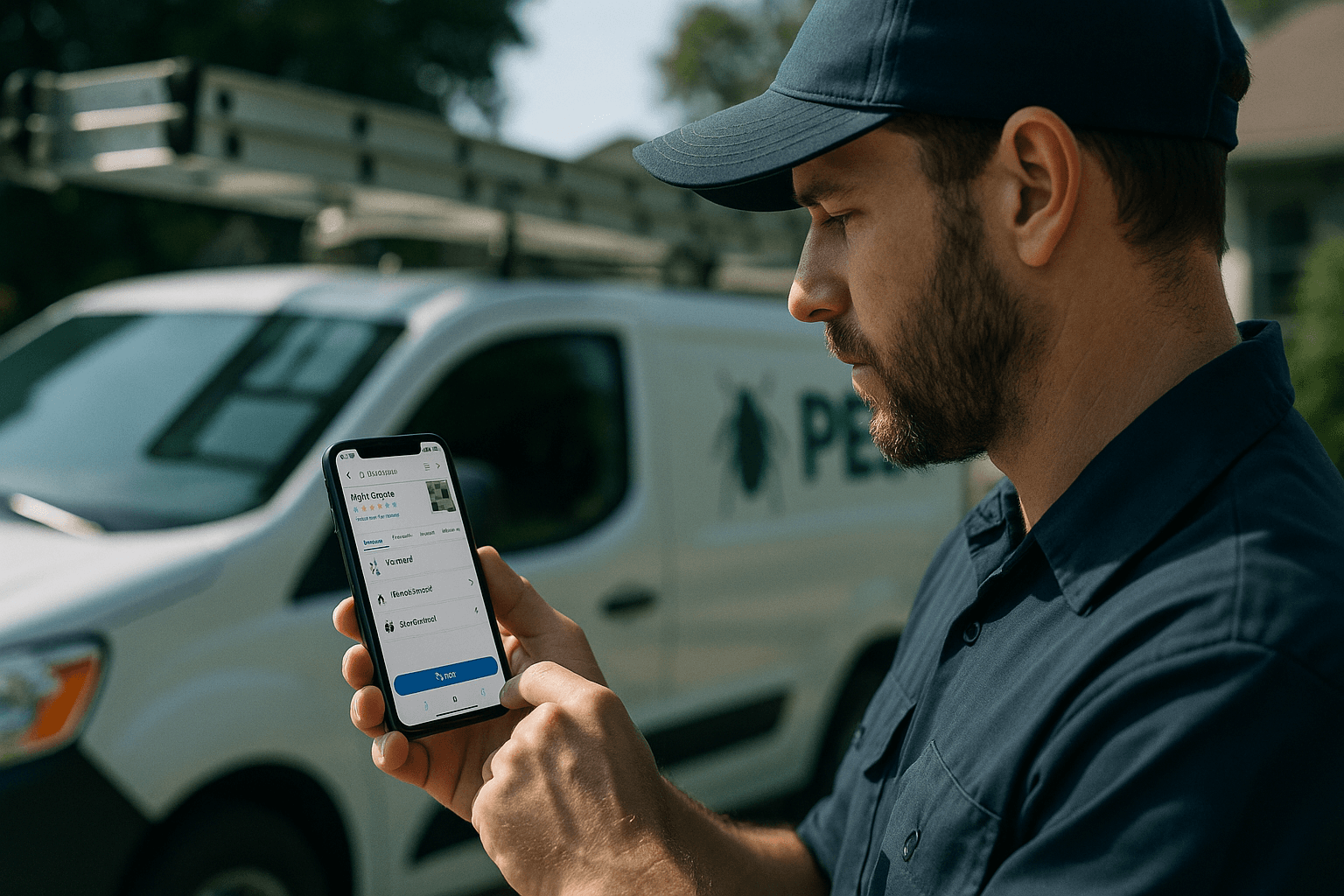
GBP Services Section Mastery: How to Structure Offerings That Actually Drive Local Calls
Your Google Business Profile services section is one of the most underused lead generation tools in local SEO. Learn how to structure your offerings so they convert searchers into callers in 2026.
The Google Business Profile services section is one of the most overlooked tools in local SEO, yet it sits directly in front of high-intent searchers who are ready to pick up the phone. Most businesses fill it in once and forget it. That is a costly habit in 2026, when AI-powered local results and voice queries are pulling structured service data more aggressively than ever before.
This guide walks through exactly how to structure your GBP services section to generate more calls, appear for more specific queries, and stand out against competitors who treat their profile as an afterthought.
- Understand what Google actually does with service data
- Build a service list that mirrors real search intent
- Write descriptions that convert and inform
- Price strategically to reduce friction before the call
- Maintain and update the section as part of your regular SEO rhythm
- Apply multi-location and agency strategies at scale
Why the Services Section Matters More Than Most Businesses Realize
Google Business Profile is not just a contact card. It is a structured data layer that Google reads to decide which local businesses to show for which queries. The services section feeds directly into that matching process.
When someone searches for "emergency boiler repair Manchester" or "corporate tax accountant Bristol," Google is not just looking at your website. It is parsing your profile's category, attributes, reviews, and service data. A business that has listed "emergency boiler repair" as a service with a clear description has a structural advantage over one that only mentions it in the business description.
In 2026, this matters even more because Google AI Overviews and AI-assisted local packs pull structured signals from profiles to generate their summaries. If your services section is empty or vague, you are less likely to appear in those AI-generated results. Learn more about that dynamic in our guide to AI Overview SEO and how to get your content featured in Google AI answers.
How Google Reads and Uses Your Service Data
Google parses service names as entity signals. A service name like "Drain Unblocking" tells Google's systems that your business is relevant to drain-related queries. A service description adds context: what the service involves, who it is for, and what problem it solves.
Google also uses this data to populate rich results in mobile search, the local pack, and Knowledge Panels. When a user taps "Services" on your profile card, they see your full list. This is a decision-making moment. A clean, detailed list moves them toward calling. A thin or confusing list moves them back to the search results to find a competitor.
"Treat every service entry like a mini landing page. The name is the headline. The description is the value proposition. Together, they either earn a call or lose one."
Building a Service List That Mirrors Search Intent
Start With What Your Customers Actually Search For
Open Google Search Console or any keyword tool and filter for the queries bringing traffic to your site. Note the specific service terms people use. Then cross-reference that against what you have listed in your GBP services section. Gaps between what people search and what you have listed are missed opportunities.
For example, a plumber might have "Plumbing Services" as a single entry. But searchers look for "leak detection," "radiator installation," "outside tap fitting," and "bathroom suite fitting" as distinct queries. Each of those deserves its own service entry.
Group Services Into Logical Categories
Google allows you to create custom service categories within the section. Use them. Categories make the section scannable for users and help Google understand your business's scope.
A legal firm might use categories like:
- Employment Law
- Commercial Property
- Contract Disputes
- Immigration Advice
A dental practice might use:
- General Dentistry
- Cosmetic Treatments
- Orthodontics
- Emergency Care
Avoid creating a single undifferentiated list. Categories reduce cognitive load and make it easier for a potential customer to find what they need quickly.
Use Specific, Descriptive Service Names
"Cleaning" is not a service name. "End of Tenancy Deep Clean" is. "Consulting" tells Google almost nothing. "Google Ads Campaign Management for E-commerce" is specific and queryable.
Write service names the way a customer would say them out loud. Voice search and conversational AI queries reward specificity. A service name that matches a natural language query is far more likely to trigger a profile match than a vague category label.
Writing Service Descriptions That Convert
Answer the Question Before It Gets Asked
Each description field gives you up to 300 characters. Use them to answer the implicit question behind the service: what does it include, how long does it take, and who is it suitable for?
Compare these two descriptions for a boiler service:
- Weak: "We service all types of boilers. Call us today."
- Strong: "Annual gas boiler service covering all makes and models. Includes safety checks, flue inspection, and efficiency report. Suitable for domestic and landlord compliance requirements."
The second description is specific, factual, and addresses multiple buyer types. It also feeds AI systems with extractable facts, which improves your chances of appearing in AI-generated local summaries.
Avoid Keyword Stuffing in Descriptions
Write for the reader first. Google's systems in 2026 are sophisticated enough to distinguish between naturally informative copy and artificially packed keyword strings. A description that reads well to a human is more likely to be surfaced by AI than one that forces in every possible variant of a keyword.
Include Trust Signals Where Relevant
Phrases like "Gas Safe registered," "fully insured," "FCA authorised," or "certified by" do double duty. They inform the searcher and add credibility signals that can reduce hesitation before a call. Include these where they are genuinely applicable, not as generic filler.
Strategic Pricing in the Services Section
Not every business should list prices, but many should. Here is how to think about it:
- Fixed-price services: List the exact price. This reduces back-and-forth and filters for qualified callers who accept your rate.
- Variable services: Use a range (e.g., "from £150" or "£200 to £500 depending on property size"). Ranges set expectations without locking you in.
- Project-based or bespoke work: Write "Price on request" or "Custom quote provided." This signals that you take enquiries seriously and will provide a tailored answer.
Businesses that display pricing often see higher call quality because callers have already self-qualified. The person who calls after seeing your price is more serious than someone fishing for the cheapest option without context.
Maintaining the Services Section as Part of Your SEO Rhythm
A services section reviewed once and left to gather dust will gradually drift out of alignment with your actual offerings and with the search landscape. Build a quarterly review into your local SEO workflow.
During each review, ask:
- Have we added any new services that are not listed?
- Have we stopped offering anything that is still listed?
- Are the descriptions still accurate, or have prices, processes, or coverage areas changed?
- Are there search queries in our data that suggest demand for a service we have not featured?
- Have competitors added services that we also offer but have not listed?
That last point is worth emphasizing. Competitor gap analysis on GBP services is a fast way to find quick wins. If a competitor's profile lists "24-hour callout" and yours does not, even though you offer it, you are invisible for those searches. Tools and workflows that surface competitor profile data make this analysis efficient rather than manual.
For businesses competing against larger brands with more resources, a tightly optimized services section is one of the genuine equalizers. We cover that dynamic in depth in our article on how small businesses can compete in local search against big brands.
Multi-Location and Agency Strategies at Scale
Standardize Templates, Then Localize
For agencies managing dozens of client profiles, or multi-location brands running profiles across multiple cities, the instinct is to copy and paste a single service list across all profiles. Resist that instinct, at least partially.
Start with a master service template for each business category. This ensures consistency in naming and structure. Then localize descriptions to reflect regional context: local pricing norms, regional compliance requirements, or neighborhood-specific service coverage.
For example, a property management company with offices in London, Manchester, and Edinburgh might list "HMO Licensing Support" on all profiles, but the description for each location should reference the local council rules and fee structures relevant to that city.
Connect GBP Services to Location Pages
Your GBP services section and your website's location pages should tell a consistent story. If a service appears in your GBP profile, there should be a page on your website that supports and expands on that service in the relevant city or region. This creates a coherent signal cluster that reinforces relevance for both traditional search and AI-assisted local results.
If you are building or scaling location pages to support this, our guide on location page architecture for multi-city service businesses covers the framework in detail.
Track Profile-Level Performance Separately
Agencies should track GBP performance metrics (calls, direction requests, website clicks from profile) at the individual profile level, not just in aggregate. This surfaces which locations are underperforming despite strong organic traffic, which often points to a thin or misaligned services section as the culprit.
Connecting Services Section Optimization to AI Search Visibility
In 2026, Google AI Overviews and AI-assisted local packs increasingly pull structured, factual data from business profiles to generate responses to local queries. A services section that is detailed, accurate, and written in plain language gives AI systems extractable content to work with.
Think of each service description as a potential answer snippet. If someone asks an AI assistant "who does CCTV installation in Leeds?" and your profile contains a service called "CCTV Installation" with a description that mentions Leeds coverage and certified installation, you have given the AI system the structured facts it needs to cite your business.
This is why service descriptions should avoid vague marketing language and lean toward factual, specific statements. "We provide excellent security solutions" tells an AI system very little. "Supply and installation of CCTV systems for domestic and commercial properties across Leeds and West Yorkshire, including remote monitoring setup" gives it something to work with.
For a broader look at how to write content that performs in both traditional search and AI environments, see our guide on how to write content that ranks in both Google Search and AI chatbots.
If you want to go deeper on GBP optimization in the context of AI search specifically, our guide on how to optimize your Google Business Profile for AI search in 2026 covers the full picture.
Conclusion: Small Changes, Meaningful Results
The Google Business Profile services section does not demand a major investment of time or budget. What it demands is deliberate attention. A well-structured service list with specific names, informative descriptions, and honest pricing signals to both Google and potential customers that your business is competent, transparent, and worth calling.
The businesses that treat their GBP as a living, maintained asset rather than a set-and-forget form will consistently outperform those that do not. In a local search environment shaped by AI systems that reward structured, factual, and specific content, the services section is one of the highest-leverage places to spend thirty minutes of optimization work.
Start with an audit: open your current services section, compare it against your actual offerings and your search data, and identify the gaps. Then fill them, systematically. That process, repeated quarterly, compounds over time into a meaningful lead generation advantage. Serpixa is built to help you run exactly that kind of structured, repeatable local SEO audit across all the profiles and pages that matter.
Frequently asked questions
Next step
Ready to turn your Google Business Profile into a consistent source of local leads? Serpixa helps local businesses and agencies audit profile completeness, identify service gaps, and prioritize the optimizations that move the needle in local search. Start your free audit today and see exactly where your profile is leaving calls on the table.
Explore Serpixa →Continue reading
Beyond LocalBusiness: Which Schema Types Actually Boost Visibility for Service Businesses in 2026
Most service businesses stop at LocalBusiness schema and leave significant visibility on the table. Discover which advanced schema types genuinely move the needle for local search in 2026.
The SEO Audit Triage Method: How to Prioritize 50 Fixes Into a 5-Step Action Plan
Drowning in a 50-point SEO audit with no idea where to start? This triage method turns your bloated fix list into a clear, ranked action plan built for local businesses and agencies in 2026.
The Seasonal Content Refresh Calendar: When and What to Update on Your Service Pages Each Quarter
A practical quarterly content refresh calendar that shows local businesses and agencies exactly when to update service page content, what to change, and how to protect organic rankings all year.
How to Build a White-Label SEO Report Clients Actually Read in 2026
Most white-label SEO reports land in a client's inbox and never get opened. Learn how to structure, design, and deliver agency reports that drive real conversations and retain clients in 2026.